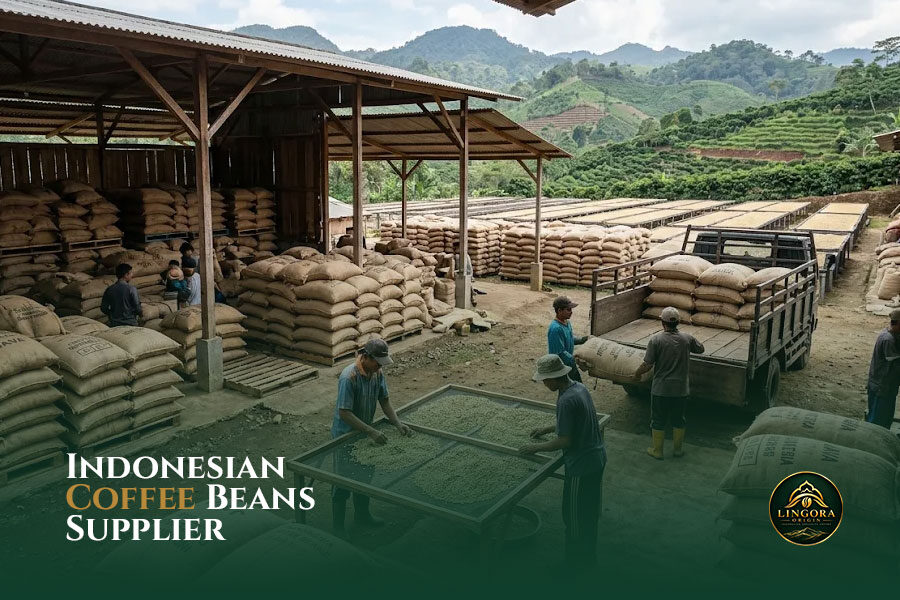
Indonesian Coffee Beans Supplier
Finding a reliable Indonesian coffee beans supplier is an important step for international buyers looking to source quality coffee for wholesale, roasting, distribution, and manufacturing businesses. Indonesia is one of the world’s recognized coffee-producing countries, offering a diverse selection of Arabica and Robusta beans from different growing regions.
From the highlands of Aceh to the coffee plantations of Sumatra, Java, Sulawesi, and Bali, Indonesian coffee is valued for its distinctive origins, diverse processing methods, and varied flavor characteristics.
For international coffee importers, choosing the right supplier involves more than comparing prices. Buyers need to consider product quality, coffee specifications, supply availability, packaging, export documentation, and international shipping arrangements.
Whether you are looking for green coffee beans, specialty Arabica, commercial Robusta, or wholesale coffee supplies, understanding the Indonesian coffee market can help you make better sourcing decisions.
In this guide, Lingora Origin explores what international buyers should know when choosing an Indonesian coffee beans supplier and how to source coffee from Indonesia for their business.
1. Why Choose an Indonesian Coffee Beans Supplier?
Indonesia offers a diverse coffee industry supported by different geographical conditions, agricultural communities, and coffee-growing traditions.
Working with an Indonesian coffee supplier provides access to several coffee origins and product categories.
Diverse Coffee-Producing Regions
Indonesia has multiple coffee-producing regions with distinctive agricultural environments.
Some of the most recognized origins include:
Aceh: Known for Gayo Arabica Coffee and other highland coffee selections.
Sumatra: Recognized for Mandheling and other Sumatran coffee varieties.
Java: Produces Arabica and Robusta coffee from different growing areas.
Sulawesi: Known for Toraja coffee and other highland coffee selections.
Bali: Offers coffee products from its distinctive agricultural landscapes.
This diversity allows international buyers to source different coffee origins according to their target market.
Arabica and Robusta Coffee Availability
Indonesia produces two major commercial coffee species: Arabica and Robusta.
Arabica is commonly used in specialty coffee, premium roasting, and single-origin products.
Robusta is widely used in espresso blends, commercial roasted coffee, instant coffee manufacturing, and other food and beverage applications.
Having access to both coffee types gives importers and distributors more flexibility when developing their product portfolios.
Different Coffee Processing Methods
Indonesian coffee producers use several post-harvest processing methods, including:
Washed Process
Natural Process
Honey Process
Wet-Hulled Process
Each processing method can influence aroma, sweetness, acidity, body, and overall cup characteristics.
Opportunities for Long-Term Coffee Sourcing
Building a relationship with an Indonesian coffee supplier can help international businesses plan recurring purchases and develop long-term sourcing strategies.
Buyers can discuss preferred origins, quality specifications, estimated quantities, and future purchasing schedules.
Supply availability and consistency should always be confirmed with the supplier for each product and harvest period.
2. Types of Indonesian Coffee Beans Available for Export
Before choosing a supplier, buyers should understand the different coffee products available from Indonesia.
Product availability depends on the supplier’s sourcing network, harvest season, and commercial arrangements.
Indonesian Arabica Coffee Beans
Indonesian Arabica coffee is popular among specialty coffee roasters, premium coffee brands, and importers seeking distinctive regional flavor profiles.
Some well-known Indonesian Arabica selections include:
Gayo Arabica Coffee
Produced in the highlands of Aceh, Gayo coffee is one of Indonesia’s recognized Arabica origins.
Depending on the coffee lot, its flavor characteristics may include chocolate, herbal, earthy, and nutty notes.
Mandheling Coffee
Mandheling coffee from Sumatra is recognized in international coffee markets for its distinctive characteristics and typically full-bodied profile.
Java Arabica Coffee
Java Arabica comes from several coffee-growing areas across Java and offers opportunities for buyers looking for coffee from this historic producing region.
Toraja Coffee
Toraja coffee originates from the highlands of South Sulawesi and is appreciated by buyers seeking distinctive Indonesian coffee origins.
Indonesian Robusta Coffee Beans
Indonesian Robusta is an important option for commercial coffee buyers.
It is commonly used for:
Espresso blends
Instant coffee manufacturing
Commercial roasted coffee
Coffee ingredient production
Wholesale distribution
Food and beverage manufacturing
Buyers should confirm the grade, moisture content, defect specifications, and intended application before placing an order.
Green Coffee Beans
Green coffee beans are unroasted beans commonly purchased by international importers, coffee roasters, and manufacturers.
Purchasing green coffee allows businesses to manage their own roasting processes and create customized coffee products.
Important specifications include:
Coffee origin and species
Variety
Processing method
Moisture content
Bean size
Defect count
Harvest information
Cupping profile
Roasted Coffee Beans
Some Indonesian suppliers may also offer roasted coffee for businesses that need ready-to-use products.
Buyers should discuss roast levels, packaging, shelf life, labeling, and product specifications before confirming an order.
3. Popular Indonesian Coffee Origins for International Buyers
Understanding coffee origins can help buyers select products that match their customers’ preferences.
Gayo Coffee from Aceh
Gayo coffee is produced in the Gayo Highlands of Aceh, particularly in Central Aceh, Bener Meriah, and Gayo Lues.
The region is widely recognized for Arabica cultivation.
Gayo coffee is an interesting option for specialty roasters and importers looking for Indonesian highland coffee.
Sumatra Coffee
Sumatra is one of Indonesia’s most recognized coffee-producing regions.
Its coffee products are available in different varieties and processing styles.
Sumatran coffee is commonly associated with a rich body and distinctive flavor characteristics.
Java Coffee
Java has a long history of coffee cultivation.
The island produces both Arabica and Robusta coffee from different agricultural regions.
Sulawesi Coffee
Sulawesi is recognized for its highland coffee production.
Toraja coffee is among the region’s best-known coffee identities in international markets.
Bali Coffee
Bali produces coffee in several agricultural areas, including highland environments.
It provides another option for businesses seeking to diversify their Indonesian coffee selection.
4. Indonesian Coffee Beans Quality Standards
Product quality is one of the most important considerations when choosing an Indonesian coffee beans supplier.
International buyers should request clear specifications before confirming commercial purchases.
Moisture Content
Moisture content is an important parameter for green coffee storage and quality management.
Buyers should establish an acceptable moisture range with the supplier and request measurement results when necessary.
Bean Size and Grading
Coffee beans can be classified according to their physical size using grading screens.
Screen size requirements depend on the product specifications and buyer preferences.
Defect Count
Defect evaluation helps buyers understand the physical quality of green coffee beans.
Common defects include:
Broken beans
Black beans
Sour beans
Insect-damaged beans
Foreign materials
Other physical imperfections
Buyers should agree on defect specifications before shipment.
Cupping and Flavor Evaluation
Cupping is an important quality evaluation method, particularly for specialty coffee.
It helps buyers assess:
Fragrance and aroma
Flavor
Acidity
Body
Aftertaste
Balance
Overall cup quality
Requesting samples and conducting cupping evaluations can help buyers select the right coffee lot.
Traceability and Product Information
Traceability provides information about the coffee’s origin and production process.
Depending on supplier capabilities, buyers may request:
Growing region
Farm or cooperative information
Coffee variety
Harvest period
Processing method
Post-harvest handling
These details can help international businesses communicate product origins and sourcing information to their customers.
5. How to Find a Reliable Indonesian Coffee Beans Supplier
Selecting the right supplier is essential for successful international coffee sourcing.
A professional supplier should provide accurate product information, transparent communication, and clear commercial arrangements.
Check the Supplier’s Product Selection
Start by reviewing the available coffee products.
Ask whether the supplier can provide the coffee types and origins you need, including Arabica, Robusta, green coffee, or roasted coffee.
Request Detailed Product Specifications
Request information about:
Coffee origin
Species and variety
Processing method
Moisture content
Bean size
Defect count
Cupping profile
Available quantity
Detailed specifications help buyers compare products and avoid misunderstandings.
Request Coffee Samples
Samples are an important part of evaluating a potential coffee supplier.
Before placing a large order, request representative samples to assess physical quality, aroma, flavor, and roasting characteristics.
Evaluate Communication and Responsiveness
A reliable business partner should communicate clearly and respond to product inquiries professionally.
Discuss availability, quotations, lead times, documentation, and shipment arrangements before confirming a purchase.
Discuss Export Capabilities
Ask about the supplier’s experience coordinating international coffee shipments.
Confirm which export documents, packaging services, and logistics arrangements can be supported.
6. Wholesale Indonesian Coffee Beans and Bulk Supply
International buyers often source coffee in larger quantities to support their roasting, distribution, and manufacturing operations.
Working with a wholesale Indonesian coffee supplier can help businesses organize their purchasing requirements.
Bulk Coffee Purchasing
Bulk purchasing may be suitable for:
Coffee importers
Wholesale distributors
Commercial roasters
Specialty coffee businesses
Coffee manufacturers
Hospitality suppliers
The available quantity depends on the product, supplier, harvest period, and sourcing arrangements.
Minimum Order Quantity (MOQ)
Minimum Order Quantity refers to the smallest quantity a supplier is willing to sell in a single order.
MOQ can vary depending on coffee type, packaging, stock availability, and shipment requirements.
Some suppliers may accommodate sample purchases or smaller commercial orders, while larger shipments may require higher quantities.
Always confirm the MOQ before requesting a final quotation.
Recurring Coffee Supply
Businesses that purchase coffee regularly may discuss recurring supply arrangements with their suppliers.
Important points include:
Estimated monthly or annual demand
Preferred coffee origin
Product specifications
Delivery schedules
Harvest availability
Commercial terms
A clear purchasing plan can help both parties manage future orders more efficiently.
7. Indonesian Coffee Beans Wholesale Prices
Wholesale coffee prices depend on several factors.
There is no single fixed price for Indonesian coffee because different origins, grades, processing methods, and quantities have different commercial values.
Coffee Origin and Variety
Arabica and Robusta generally have different market pricing structures.
Specific origins and selected coffee lots may also have different prices based on their characteristics and availability.
Product Quality and Grade
Quality specifications such as moisture content, bean size, defect count, and cupping results can influence wholesale pricing.
Processing Method
Different processing methods may involve different production costs and post-harvest requirements.
Order Quantity
The quantity purchased can influence the commercial quotation.
Larger orders may have different pricing structures depending on supply availability and logistics.
Packaging and Shipping
Packaging materials, labeling, cargo handling, and international transportation contribute to the total purchasing cost.
Requesting a Coffee Wholesale Quotation
To receive an accurate quotation, provide the supplier with:
Preferred coffee origin.
Arabica or Robusta requirements.
Estimated order quantity.
Quality specifications.
Packaging preferences.
Destination country.
Preferred Incoterms.
Providing complete information makes it easier for suppliers to prepare relevant offers.
8. Packaging and International Shipping for Indonesian Coffee
Proper packaging and transportation arrangements are important for maintaining coffee quality during international delivery.
Jute Coffee Bags
Jute bags are traditionally used for commercial green coffee shipments.
They are a common packaging option for transporting coffee in bulk.
GrainPro and Hermetic Liners
Specialized liners can provide additional protection against moisture and external environmental exposure.
They may be considered for green coffee that requires additional storage protection.
Custom Packaging
Some buyers may require specific bag sizes, labels, or branding.
These requirements should be discussed with the supplier before production and shipment.
Sea Freight
Sea freight is commonly used for larger commercial coffee shipments.
It offers cargo capacity and can provide a more economical transportation option per unit for bulk orders.
Air Freight
Air freight may be suitable for samples or smaller shipments that require faster transportation.
However, transportation costs per kilogram are generally higher than sea freight.
9. Export Documents and Import Requirements
International coffee transactions require appropriate commercial, shipping, and regulatory documentation.
The exact requirements depend on the coffee product and destination country.
Commercial Invoice
A commercial invoice describes the transaction between the exporter and importer.
It generally contains seller and buyer details, product descriptions, quantities, unit prices, total values, and agreed commercial terms.
Packing List
A packing list provides information about shipment packaging, including package count, net weight, gross weight, and product details.
Bill of Lading or Air Waybill
A Bill of Lading is generally used for sea freight, while an Air Waybill is used for air transportation.
Certificate of Origin
A Certificate of Origin confirms the origin of exported products and may support preferential tariff treatment under applicable trade agreements.
Phytosanitary Certificate
A Phytosanitary Certificate may be required for green coffee imports depending on the destination country’s plant health regulations.
Food Safety and Quality Requirements
Depending on the market, buyers may need to consider:
Contaminant limits
Ochratoxin A requirements
Pesticide residue limits
Product traceability
Food safety documentation
Labeling regulations
Importers should verify the latest requirements with the relevant customs, agricultural, and food safety authorities before arranging shipment.
10. Why Choose Lingora Origin as Your Indonesian Coffee Sourcing Partner?
Lingora Origin welcomes inquiries from international businesses interested in sourcing coffee from Indonesia.
For importers, wholesalers, roasters, and distributors, understanding product requirements and establishing clear communication are important steps toward a successful sourcing relationship.
When discussing your coffee requirements with Lingora Origin, you can explore:
Indonesian Arabica and Robusta selections.
Different regional coffee origins.
Green coffee and roasted coffee options.
Product specifications and quality information.
Sample and quotation inquiries.
Wholesale purchasing requirements.
Export and shipping arrangements.
Whether you are exploring Indonesian coffee for the first time or expanding an existing product portfolio, Lingora Origin welcomes discussions about your sourcing needs.
11. How to Order Coffee from an Indonesian Supplier
For international buyers, the purchasing process can be organized into several practical steps.
Step 1: Define Your Coffee Requirements
Identify the coffee type, origin, processing method, quality specifications, and estimated quantity.
Step 2: Contact the Supplier
Send an inquiry explaining your business requirements and preferred coffee products.
Step 3: Request Product Specifications
Ask for information about coffee quality, processing, available quantities, and packaging.
Step 4: Request Samples
Evaluate representative samples before confirming a commercial order.
Step 5: Review the Quotation
Discuss prices, MOQ, payment terms, Incoterms, and shipping arrangements.
Step 6: Verify Import Requirements
Confirm the documents, import permits, customs classification, and applicable regulations in your destination country.
Step 7: Confirm the Order and Shipment
Finalize the product specifications, commercial agreement, payment arrangements, and export documentation.
Following a clear sourcing process helps reduce misunderstandings and supports better communication between buyers and suppliers.
Frequently Asked Questions About Indonesian Coffee Beans Suppliers
Where can I find an Indonesian coffee beans supplier?
International buyers can contact Indonesian coffee exporters and suppliers directly. Before selecting a supplier, evaluate product availability, quality specifications, communication, and export capabilities.
What types of coffee can I source from Indonesia?
Indonesia produces Arabica and Robusta coffee from regions including Aceh, Sumatra, Java, Sulawesi, and Bali.
Can I buy Indonesian coffee beans in bulk?
Yes. International importers, wholesalers, distributors, and roasters can inquire about bulk purchasing options. Minimum order quantities depend on the supplier and product availability.
Can Indonesian suppliers provide green coffee beans?
Yes. Green coffee beans are commonly traded for international roasting and manufacturing businesses. Buyers should confirm product specifications and available quantities.
How much do Indonesian coffee beans cost?
Prices depend on origin, variety, grade, processing method, order quantity, packaging, and shipping arrangements. Contact the supplier for a quotation based on your requirements.
Can I request coffee samples from Indonesia?
Yes. Buyers can inquire about samples to evaluate physical quality, aroma, flavor, and roasting characteristics before placing a larger order.
What documents are required to import coffee from Indonesia?
Common documents may include a commercial invoice, packing list, Bill of Lading or Air Waybill, Certificate of Origin, and phytosanitary documentation where required. Requirements depend on the destination country and product type.
How are Indonesian coffee beans shipped internationally?
Commercial shipments are commonly transported by sea freight, while air freight may be suitable for samples and smaller orders.
Can I establish a long-term coffee supply relationship with an Indonesian supplier?
Long-term sourcing arrangements may be possible depending on supplier capacity, product availability, harvest schedules, and commercial agreements.
Contact Lingora Origin – Your Indonesian Coffee Beans Sourcing Partner
Looking for an Indonesian coffee beans supplier for your importing, wholesale, roasting, or distribution business?
Lingora Origin welcomes inquiries from international coffee buyers interested in sourcing Indonesian coffee.
Whether you are looking for Gayo Arabica, Sumatran coffee, Java coffee, Robusta, green coffee beans, or other Indonesian coffee selections, our team welcomes your product and sourcing inquiries.
Contact Lingora Origin to:
Explore available Indonesian coffee products.
Request detailed product specifications.
Ask for coffee samples.
Discuss wholesale and bulk purchasing.
Request export quotations.
Discuss packaging and shipping requirements.
Looking for an Indonesian Coffee Beans Supplier?
Tell us your preferred coffee type, estimated order quantity, quality requirements, and destination country.
Contact Lingora Origin today to discuss your sourcing requirements and explore Indonesian coffee opportunities for your international market.
Lingora Origin – Connecting Indonesian Coffee with Global Markets.